Local Author & Teacher Ty Brown Shares Spokane History in Two Talks
Posted on March 17, 2026 at 6:00 am
By Janet Hacker-Brumley, SCLD librarian
Local History Presentations
This year celebrates America’s 250th anniversary. When discussing local history with a customer at Argonne Library, they recommended the history books by Ty Brown, local author and teacher. Based on that suggestion, we were able to bring Brown to the library to discuss two different topics.
One presentation focuses on an engineer who helped shape Spokane but was mostly forgotten to history and the other on various ways the Little Spokane River has influenced local history and modern day. You can hear Ty speak about these topics at the following SCLD libraries.
Byron Riblet: Forgotten Engineering Genius with Ty Brown
SPOKANE VALLEY
Saturday, Mar 21, 3–4pm
Sponsored by the Friends of the Argonne Library
MORAN PRAIRIE
Saturday, Apr 25, 11am–12pm
Along the Little Spokane River: A Sense of Place with Ty Brown
NORTH SPOKANE
Thursday, Apr 16, 6:30–7:30pm
SPOKANE VALLEY
Saturday, May 16, 3–4pm
Sponsored by the Friends of the Argonne Library
Find out more about these Ty Brown events on our event calendar.
Q&A with Ty Brown
To learn more, I asked Ty Brown some questions, and he shared the following answers about himself, local history, and his books.
Janet: Could you tell us a little bit about yourself?
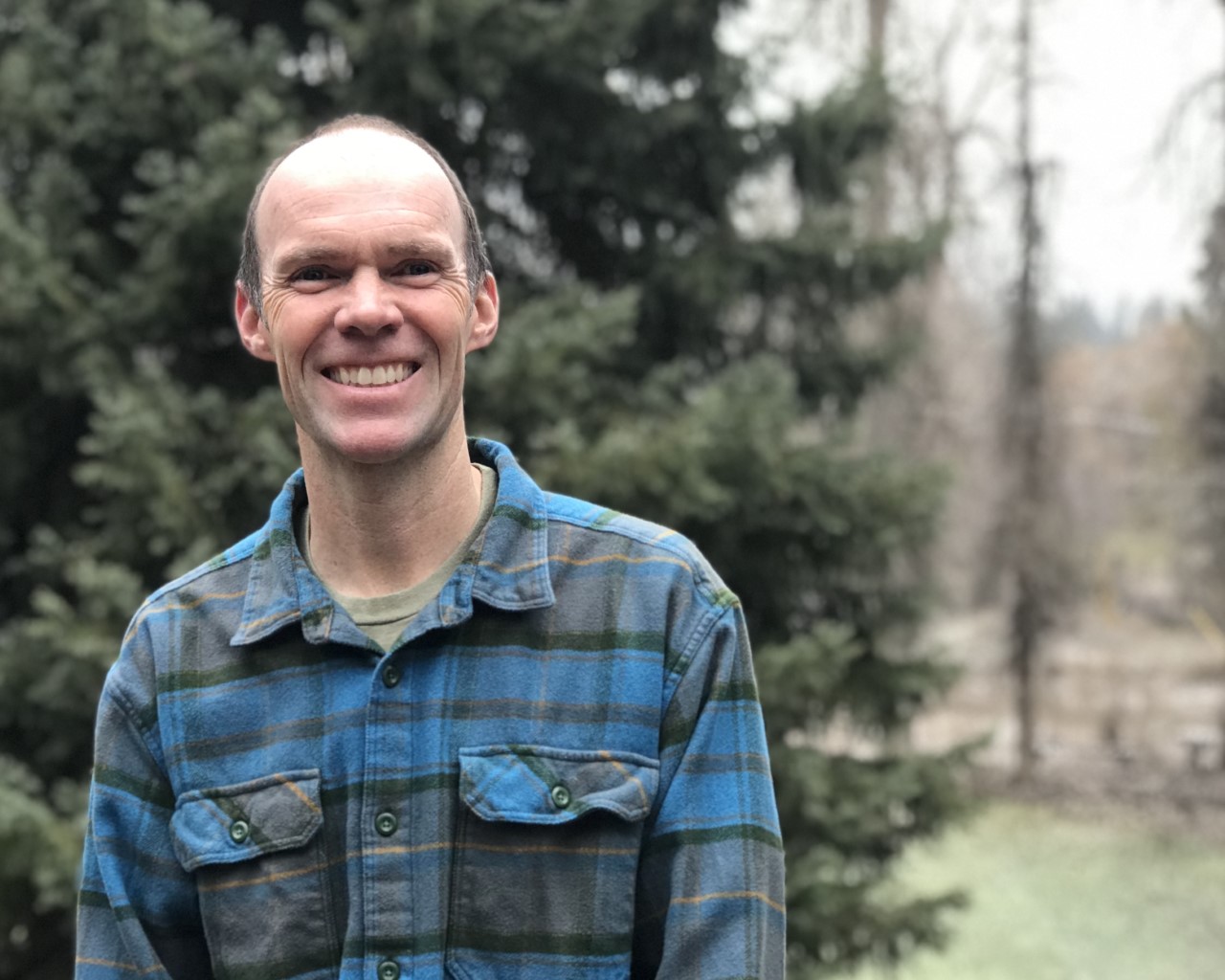
Ty: I have lived in Spokane most of my life, especially on the north side of town. My passion has been history, mostly local Spokane history. I’ve taught high school history and English for the past 20 years and love my job. My wife, daughter, and I like to travel and enjoy the great outdoors.
Janet: What were some of Byron Riblet’s early contributions to Spokane? How did the growth of Spokane factor into his work on chairlifts?
Ty: He was one of Spokane’s original planners. As a civil engineer, he platted most of the early additions, contributed to electric railways that serviced Spokane, and engineered the Upriver Dam, which provides Spokane with drinking water.
In the late 1800s, Riblet got into designing aerial trams in Canada that transported ore from rugged landscapes to transportation hubs. Eventually, his Riblet Tramway Company, based in Spokane, was the largest in the world. During the Great Depression, mining interests decreased, and Riblet converted production to ski chairlifts. At the time, only one chairlift was functioning in America. His company established the second lift and, from there, dominated the industry for decades.
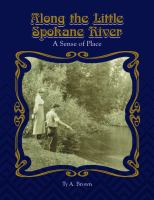
Janet: The subtitle of your book “Along the Little Spokane River” is “A Sense of Place.” What are some distinctions that make the river unique?
Ty: The Little Spokane River Valley has the unique distinction of being close to the urban environment of Spokane yet removed enough to give it its own sense of place. The lower end of the river is becoming increasingly open to public use, while the middle section is dominated by residential development, including two golf courses. The upper portion is rural and was once home to turn-of-the-century lumber mills. Each section has its own identity.
Janet: How did the river interest you as a topic of research?
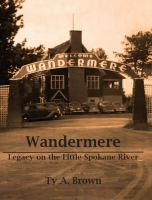
Ty: I have lived in the Little Spokane River area for the majority of my life and have grown to appreciate its beauty. My family developed Wandermere Golf Course in the 1930s, and I became interested in its origins. My first book was about Wandermere, and this led me to researching all things Little Spokane River.
Janet: What’s a fact about each of these topics that might spark interest in people looking to attend your upcoming presentations?
Ty: The Riblet family is interesting in that most people don’t realize the company was not one person but three brothers who were involved with the business. Byron Riblet, the engineer, was the brain behind one of Spokane’s most successful businesses. Yet his brother Royal, who built what is now Arbor Crest, gets most of the credit. Royal worked for his brother as a salesman until he was fired by Byron for fraud and other issues. The two brothers never spoke again.
In addition, the Little Spokane River story is one of history, human connections, and conservation of a beautiful, natural place.
Janet: Are there any other local history topics you have an interest in writing about?
Ty: I would love to write about the Italian American community in Spokane through the lens of Albert Commellini. He was a character in Spokane associated with Prohibition and bootlegging.
Books by Ty Brown
These nonfiction books by Ty Brown can be found in our Inland Northwest Collection.