
The History, Care & Keeping of Your American Flag: An Interview with Stan Wills
Posted on June 3, 2026 at 6:00 am
By Dana Mannino
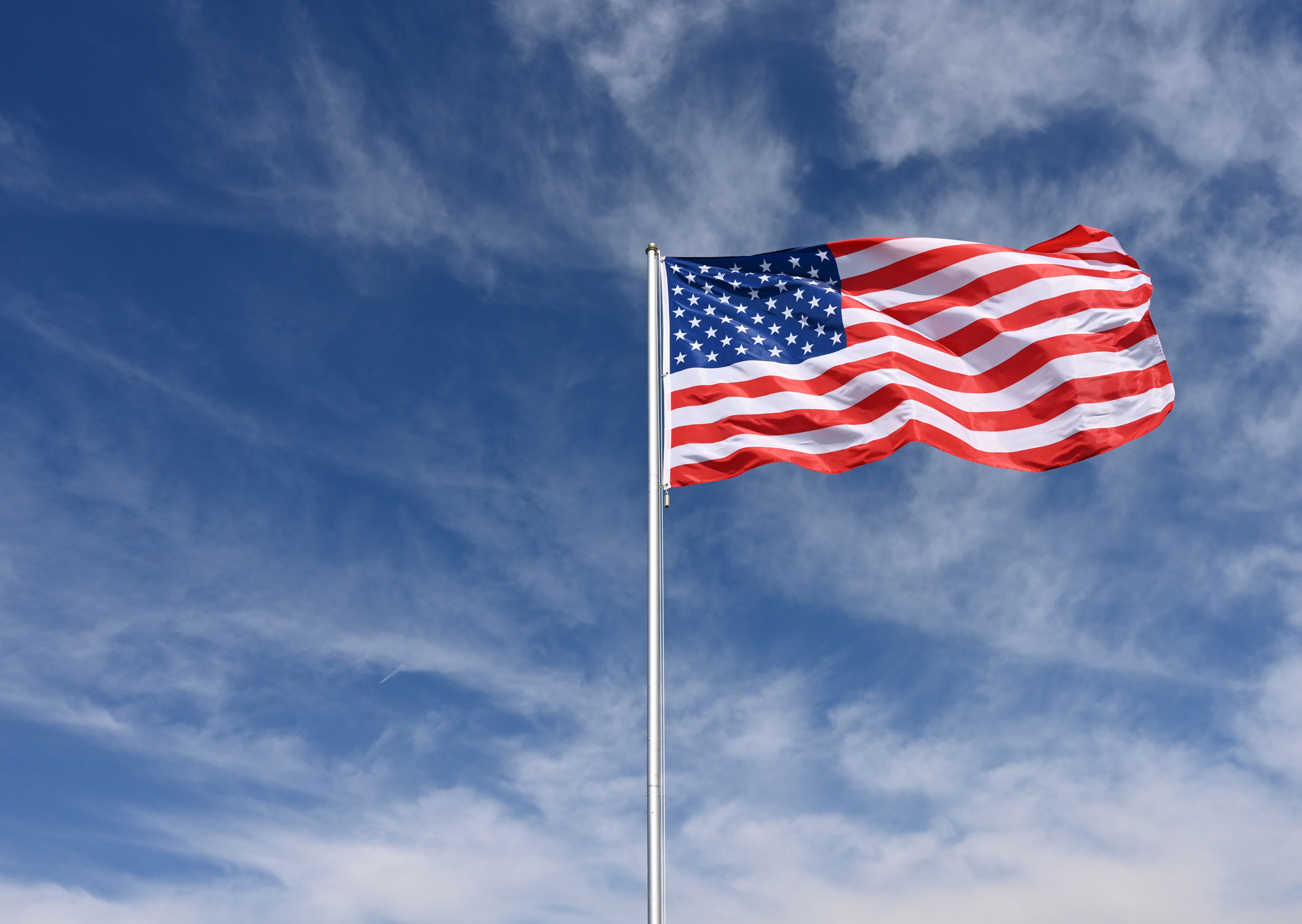
This year marks the 250th anniversary of the signing of the Declaration of Independence, and the library is celebrating with programs that help us connect with our nation’s history. Among these is a presentation about the American flag by Stan Wills, curator of the Spokane Flag Museum.
The History, Care & Keeping of Your American Flag
SPOKANE VALLEY LIBRARY
22 N Herald Rd
Saturday, June 20, 3–4pm
At this event, Stan will collect worn and damaged U.S. flags to be honorably retired at a later date. There is no registration for this event and it is for all ages.
Wills spent 20 years on U.S. Navy submarines before retiring to Spokane Valley. He is a member of the Sons of the American Revolution and an amateur vexillologist—a person who studies flags.
Interview with Stan Wills
I caught up with Stan to ask what drives his dedication to our nation’s flag. Here’s our conversation.
Dana: What got you interested in flags?
Stan: Twenty years ago, I joined the Sons of the American Revolution. People were familiar with the Daughters of the American Revolution, but not many people had heard about the Sons. So, I started setting up a table at community events to raise awareness of the group.
At the table, I set up six historic flags. Kids would stop by, and I would ask them a question like “How many stars are on the flag?” or “How many stripes?”
If they answered right, I would give them a prize. However, most of the kids couldn’t answer. They would turn and ask their parents. The parents didn’t know either! They would say, “Well, we studied that in school, but now we’ve forgotten.” So, I decided that I needed to educate the public about our flag.
Dana: Tell me about your work educating the public.
Stan: I started doing programs at schools, retirement centers—really any community organization that would have me. I have several different presentations.
In one program, I show how our flag evolved. I have replicas of early flags with snakes on them, flags with trees on them, and many different flags with 13 stars on them. Most people only know the Betsy Ross version of the 13-star flag, but there were actually 39 different flag designs with 13 stars on them.
How the U.S. came to pick the Besty Ross version is a good story. I want kids to be aware of the flag, how it evolved, what it means, and what people have sacrificed for it in the course of our history.
I also have a presentation on Independence Day. Most people know that the 4th of July is the day that we declared our independence, but not a lot of people can tell me the date when we won our independence—the date of the end of the Revolutionary War.
Many of my presentations are for kids doing their 5th-grade American History unit. One of my presentations is about life in colonial America. I try to cover things that kids would wonder about, like “What did colonial kids have for breakfast?”
For this presentation, I went out and bought toys and other artifacts that kids would have used in colonial times. The kids really connect with that. I also bring the toys out to retirement centers. The people there love them because the objects remind them of youthfulness.
Like any good teacher, I have learned when kids will usually ask questions. If a kid asks a question and the answer is not covered in my presentation, I add that to the program next time.
Dana: Do you have a particularly meaningful memory from your work?
Stan: After the first presentation I did, a woman came up with her four homeschooled kids. She said, “We just finished our unit on U.S. history. Ask them a question, and if they can’t answer it, we’ll re-do the unit. If you are here next year, we’ll come back with the answer.”
I asked them a question and they couldn’t answer it. And they came back the next year, and they had an outline of their new unit and knew the answer. The mom said, “Ask them another.” So, I asked them another, and they couldn’t answer that one either. But they said they would come back.
The next year only two of the kids came back because the others were at WSU studying American history. So, it starts with the flags, and then it leads to a love of American history.
Dana: Tell me about your work at the flag museum.
Stan: Cemetery Historian Chet Caskey and I started the museum in 2008 at Fairmount Cemetery in the old Rock Chapel designed by Kirtland Cutter. We started with 10 flags. The collection grew until the flags didn’t all fit. Then the Fairmount Association gave us a larger building at the Pines Cemetery. Now the museum is located at 1402 S Pines Rd in Spokane Valley.
I just remodeled the building so that I can accommodate groups of 30 or more people. But with the new configuration, there isn’t room to display the entire collection of flags. So, I am rotating through different themed collections of flags.
Right now, I have Navy flags on display. I have a collection of flags from Texas. I have flags for the women who fought in the American Revolution. There were Native American tribes who fought with us, and I’ve got the flags they marched under. You learn some things about history in school, but there’s a lot that they might not cover. The flags can help tell those stories.
I have over 100 flags in the museum. Most of them are replicas. I just received 12 flags from the Northwest Museum of Arts and Culture—and those flags are over 100 years old. Some of them I can display, some I can’t because they are just too big. One is 16 feet long. I’ll photograph the ones that are too large and display them as a poster. I’ll preserve the actual flags by rolling them in archival paper and storing them in tubes.
Dana: I read in a Spokesman-Review article that one of your favorite flags in the museum is the Culpeper Minutemen flag. Would you tell me about that flag and what it means to you?
Stan: Culpeper County [in Virginia] was where all my family lived during the American Revolution. It’s the flag they marched under. One of my relatives was the captain of George and Martha Washington’s bodyguard.
Dana: Your presentation at the library will cover not just the history of the American flag but also the care and keeping of it. What are some common mistakes people make when displaying a flag on their property?
Stan: They don’t take it down at night. If you don’t have the flag lit at night, you are supposed to retire it in the evening. During inclement weather, you’re supposed to take the flag down until the weather changes.
During the program, I’ll be providing the U.S. Flag Code as a handout. It describes how to properly display a flag.
The thing that bothers me the most is that people keep the flag up until it’s completely shredded. I keep flags in my truck and if I see a shredded one, I stop and ask if I can trade them my new flag for their old one. And then I retire it.
We maintain several flag collection boxes in the community. I retire about 100 flags a month.
Dana Mannino is a librarian at Spokane County Library District. She plans library programs for adults and serves as an SCLD liaison to the Latinx community. At home, she hosts biannual Lord-of-the-Rings–themed parties and watches BritBox. How does she take her tea? Very, very seriously.
Tags: adults, America's 250th, community, kids, parents, teens, tweens